
Bacteriostatic Water Explained: A UK Laboratory Guide
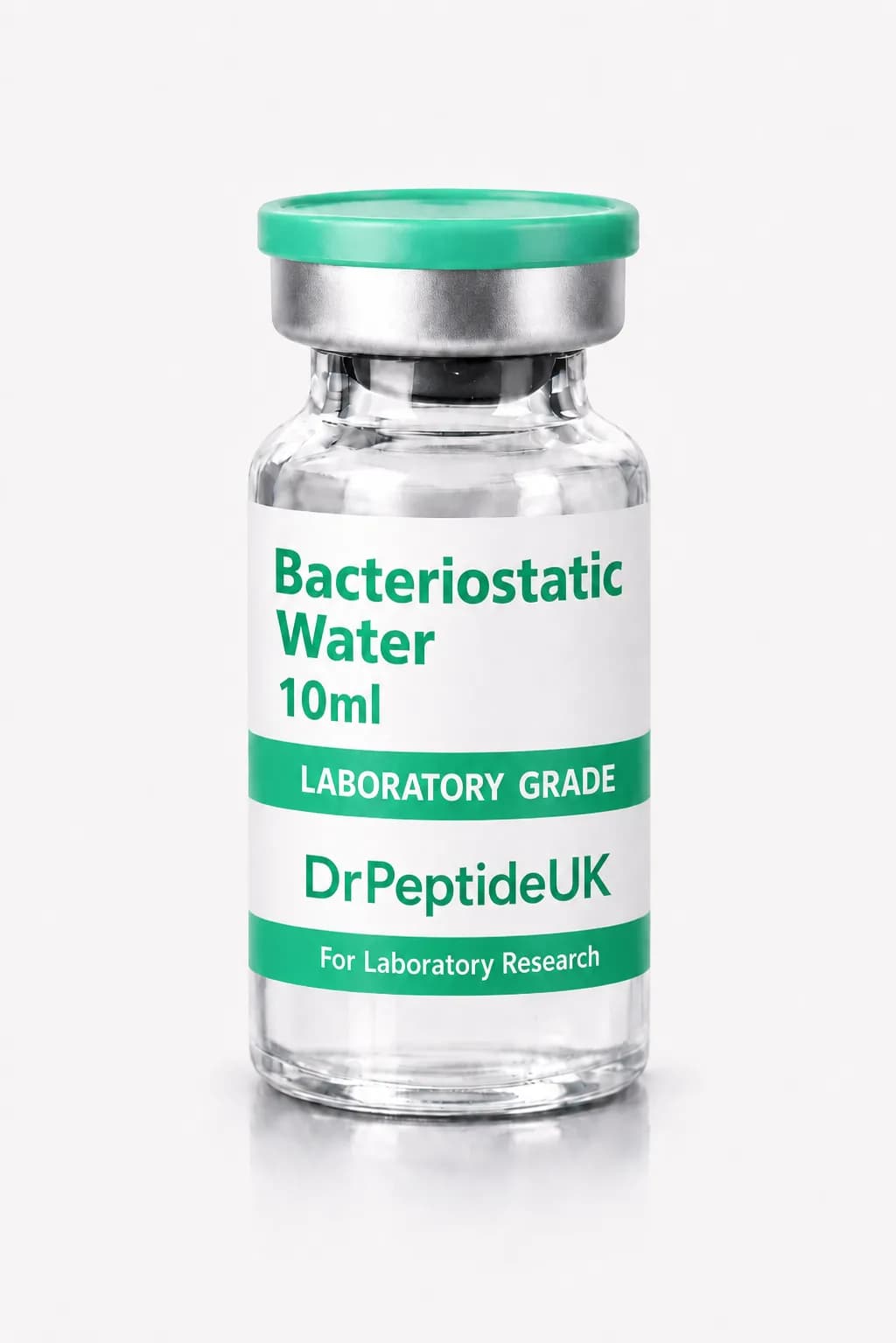
Bacteriostatic water is one of the most common laboratory diluents for research peptides. If you work with lyophilised (freeze-dried) peptides, you will almost certainly need it. This guide explains what it is, how it differs from plain sterile water and how to store it.
What is bacteriostatic water?
Bacteriostatic water is sterile water that contains a preservative, in standard formulations 0.9% benzyl alcohol. The preservative suppresses the growth of most bacteria, which is what "bacteriostatic" means, so a vial can be accessed more than once during a study.
Bacteriostatic water vs sterile water
- Sterile water contains no preservative. Once opened, treat it as single-use.
- Bacteriostatic water contains a preservative, so a vial can be accessed repeatedly within the period stated on its label.
For work that draws from the same vial several times, bacteriostatic water is usually the practical choice.
How laboratories use it
Lyophilised peptides are supplied as a dry powder and must be reconstituted before analysis. The researcher adds a measured volume of bacteriostatic water to reach the concentration their protocol requires. Adding the diluent slowly down the side of the vial and swirling gently, rather than shaking, helps keep the peptide intact. Pre-filled peptide pens skip this step because they are supplied already in solution; our guide to pens vs vials compares the two.
Storage
Store unopened bacteriostatic water at controlled room temperature, away from direct light. Once opened, follow the use window on the label and discard the vial if the solution becomes cloudy or discoloured. For peptides after reconstitution, see how to store peptide pens and vials.
Buying bacteriostatic water in the UK
Our Bacteriostatic Water 10ml (laboratory grade) is dispatched from the UK with delivery in 1–3 business days, alongside our other research solutions. It is supplied for laboratory research use only and is not for human or veterinary use.
Like this? Tell Google you want more of it.